

Equine-Products
PTS Treatment for Equine Tumors to Be Presented at the World Equine Veterinary Association Congress
The clinical study results of GWA106, an investigational animal targeted tumor-ablating drug based on PTS, for the treatment of equine tumors have been accepted for presentation at the 2026 World Equine Veterinary Association (WEVA) Congress.
The abstract describing the clinical outcomes has successfully passed the WEVA scientific review process and will be presented at the congress. The findings are expected to provide valuable data regarding the safety and efficacy of PTS in the treatment of equine tumors.
The global horse population is estimated to be approximately 60 million, with around 600,000 new cases of equine tumors diagnosed each year, representing a potential therapeutic market valued at approximately USD 180 million.
However, the treatment of tumors in horses presents unique challenges. Conventional therapeutic approaches such as radiotherapy, cryotherapy, and electrochemotherapy may cause adverse effects that can interfere with essential functions including locomotion, feeding, or excretion, thereby significantly affecting the horse’s quality of life.
Surgical excision, particularly when tumors are located in specific anatomical regions, further highlights the complexities of large-animal medicine. These procedures must be performed in specialized surgical facilities designed for large animals and often require industrial-grade lifting systems to move or stabilize the horse during surgery. Such procedures impose substantial demands on infrastructure and cost, while also exposing the horse to considerable risks, including complications associated with general anesthesia and potential secondary injuries during lifting or repositioning.
In contrast, PTS therapy provides a novel and less invasive alternative. Through precise local administration and intratumoral injection, the treatment directly targets the tumor site without the need for extensive surgical intervention. This approach significantly reduces systemic burden, anesthesia-related risks, and reliance on specialized surgical facilities. As a result, PTS therapy has the potential to effectively treat tumors while preserving the horse’s mobility, comfort, and overall quality of life, addressing a critical unmet need in equine oncology.
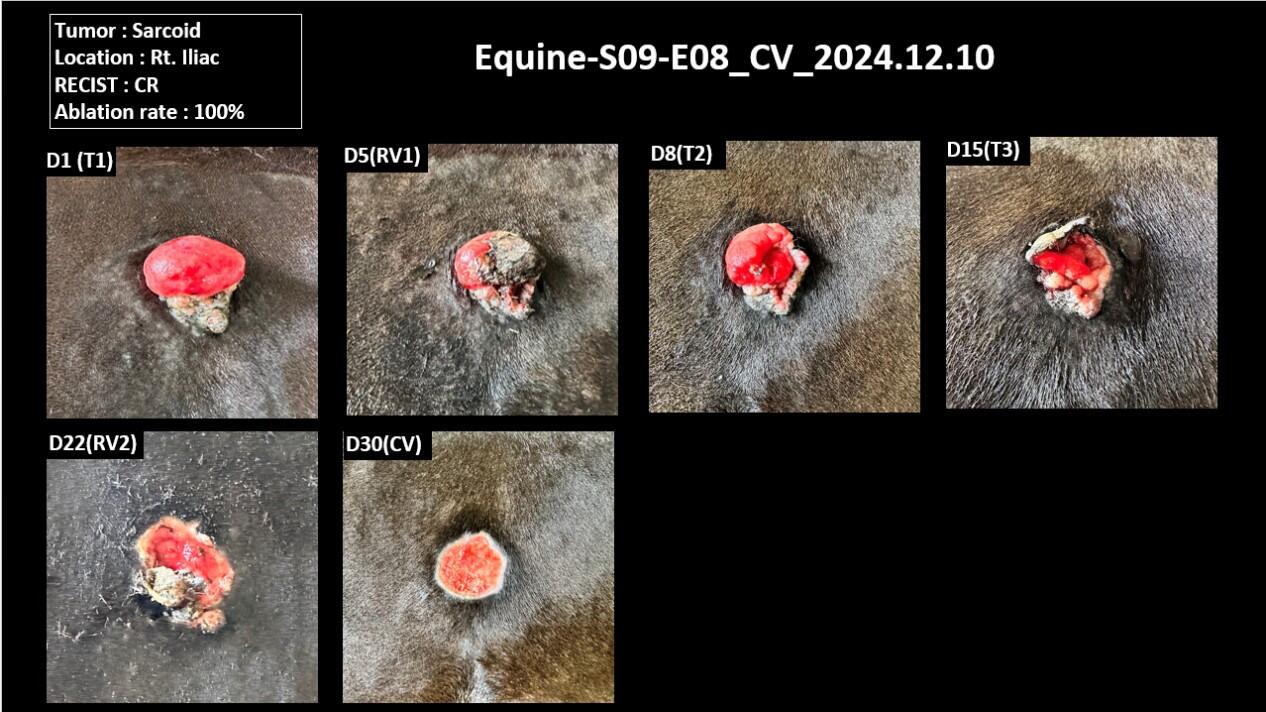
To date, 12 horses with palpable skin tumors have been treated, including cases of melanoma, sarcoma, and squamous cell carcinoma. The related clinical outcomes will be presented at the WEVA 2026 Congress.

Although most equine skin tumors tend to grow relatively slowly, there remains a risk of malignant transformation or local progression. If not addressed at an early stage, continued tumor growth may cause discomfort during riding or physical activity, potentially affecting the horse’s movement, performance, daily behavior, and overall well-being.
As tumors enlarge or extend into deeper tissues, they may adhere to fascial structures or exert pressure on surrounding tissues and organs, which can significantly increase the complexity of subsequent treatment. In such cases, treatment may require a larger intervention area and result in more extensive wounds. In addition, as horses age, the risks associated with therapeutic procedures may also increase. Therefore, when abnormal or unexplained masses are observed on a horse’s skin, early veterinary examination and evaluation are strongly recommended.
During this clinical study, all enrolled cases underwent comprehensive assessments, including:
Physical examination
Blood testing
Histopathological confirmation of tumor diagnosis
Evaluation of tumor size and condition
A total of 11 cases have now completed the treatment course, including:
Melanoma: 7 cases
Sarcoma: 3 cases
Squamous Cell Carcinoma: 1 case
The research findings and subsequent analyses are currently being compiled. The study aims to provide additional clinical insights and scientific evidence to support the management and treatment of equine palpable skin tumors.